Top 10 notable IT solutions applied in daily life in 2025
In 2025, groundbreaking information technology solutions continue to revolutionize human life, ushering in an unprecedented era across labor, healthcare, education, and business.
Amid the rapid transformations of the digital age 4.0, IT solutions have become a cornerstone for innovation and optimization in every aspect of society. This year will mark a significant surge in the application of these technologies across core industries such as healthcare, education, manufacturing, logistics, and agriculture. From daily communication and personal finance management to long-term business strategy, advanced technologies are becoming indispensable.
1. Versatile AI Assistants
AI virtual assistants are among the most impactful IT solutions for users in 2025. These intelligent systems go far beyond simple chatbots or task managers, they are evolving into hyper-personalized digital companions that enhance productivity and convenience across all life domains.
Tools like ChatGPT, Gemini, and Copilot have been significantly enhanced to process natural language, images, and videos with remarkable precision. Users can issue voice commands and receive responses in the form of images, illustrations, or contextual video clips. AI’s capacity to "understand humans" is evolving rapidly, becoming akin to a personal assistant for each individual, whether they are students, professionals, or senior executives.
More impressively, these assistants are now integrated into productivity ecosystems like email clients, document editors, scheduling tools, and CRMs. They help draft detailed reports, summarize meetings, recommend business strategies, and even simulate conversations for customer service training. With their ability to learn user preferences and work styles, these assistants streamline workflows and reduce cognitive load, turning complex tasks into manageable actions.
2. Generative AI
Generative AI is transforming media, marketing, education, and the arts in profound ways. It empowers creativity at an unprecedented scale, offering tools that were once only accessible to trained professionals.
From a simple text prompt, users can now generate stunning visuals, immersive video content, music tracks, and animated sequences with high realism. Platforms such as Sora, RunwayML, Pika Labs, and Adobe Firefly have democratized content creation, allowing individuals with minimal technical knowledge to produce compelling multimedia.
In the marketing world, companies are using generative AI to create hyper-personalized ad campaigns. By analyzing user behavior and preferences, AI can tailor visuals, language, and tone to resonate with specific audience segments. In education, teachers are using generative tools to create engaging visual aids, simulations, and quizzes that suit diverse learning needs.
Artists and designers are also exploring generative AI to expand the boundaries of their work, collaborating with algorithms to co-create original artworks, music compositions, and even fashion designs. This convergence of creativity and computation is laying the foundation for new forms of expression that blur the line between human and machine-made art.
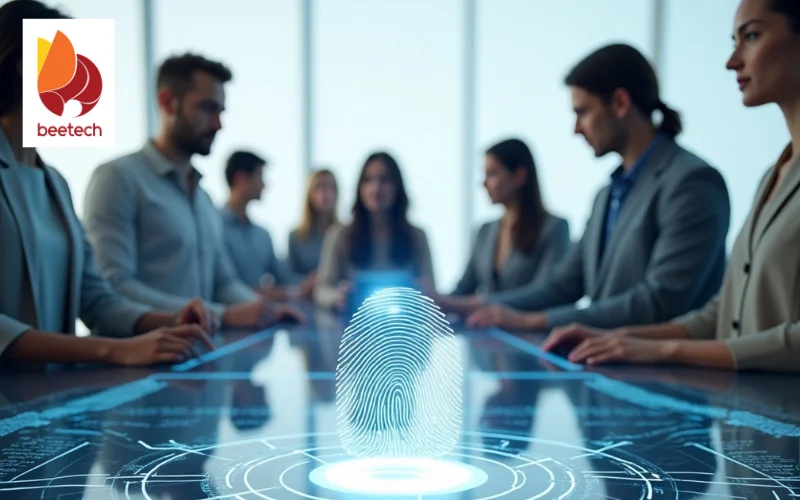
3. Biometric Authentication
The shift from traditional passwords to biometric authentication is transforming how we interact with technology. Passwords are increasingly seen as a weak link in cybersecurity, prone to being forgotten, stolen, or hacked. Biometric systems using fingerprints, facial recognition, iris scans, and even behavioral patterns offer a more secure and user-friendly alternative.
The benefits go beyond security. Biometric authentication streamlines digital experiences, from unlocking devices and accessing apps to authorizing payments and logging into platforms. For businesses, this means faster onboarding, improved compliance, and reduced fraud. For consumers, it offers seamless, instant access to services often taking less than a second.
Biometric technology solution is also being integrated into public infrastructure, like airport security, banking kiosks, and government services, accelerating identity verification and minimizing human error.
Looking forward, multimodal authentication is gaining popularity, further enhancing identity assurance without compromising user convenience.
4. AI in Healthcare
Another IT solution in healthcare is driving monumental shifts. With its ability to process massive datasets and recognize complex patterns, AI is transforming diagnosis, treatment planning, and patient monitoring.
AI-assisted diagnostic tools now analyze medical imaging, such as MRIs, CT scans, and X-rays with greater speed and comparable or superior accuracy to human radiologists. In some hospitals, AI can flag early signs of disease within seconds, allowing for timely interventions that save lives.
Wearables powered by AI are making personal health monitoring more accurate and accessible. Devices like smartwatches and fitness trackers monitor heart rate, blood pressure, oxygen saturation, and sleep quality in real time. Some even provide early warnings for serious conditions such as stroke or heart failure.
Moreover, AI is playing a critical role in robotic surgery, where precision and consistency are paramount. Postoperative care is also benefiting from AI-driven analytics that detects complications early and suggests rehabilitation strategies.
5. Smart Homes
The concept of smart homes is evolving into intelligent living environments powered by AI and the Internet of Things (IoT). No longer a luxury, smart home systems are becoming the norm in urban apartments and residential communities.
AI acts as the brain of the smart home, interpreting data from IoT sensors embedded in devices like thermostats, security cameras, lights, TVs, air purifiers, and vacuum robots. It learns from user behavior to automate daily routines, adjusting lighting based on time of day, playing music upon entry, or optimizing heating and cooling systems to reduce energy use.
Voice-controlled assistants like Alexa, Google Home, and Xiaomi’s smart ecosystem now support multilingual commands, including Vietnamese. These systems integrate seamlessly across home zones offering both convenience and operational efficiency.
Smart homes also contribute to sustainability. By monitoring energy consumption, water usage, and indoor air quality, these systems help homeowners reduce environmental impact and utility costs while enhancing comfort.
In emergencies, smart systems can detect smoke, gas leaks, or unusual activity and automatically notify authorities or shut off hazardous systems. Future smart homes may also include eldercare features, monitoring movement, vital signs, and medication schedules to support aging populations.
6. AI and Biometric Payment
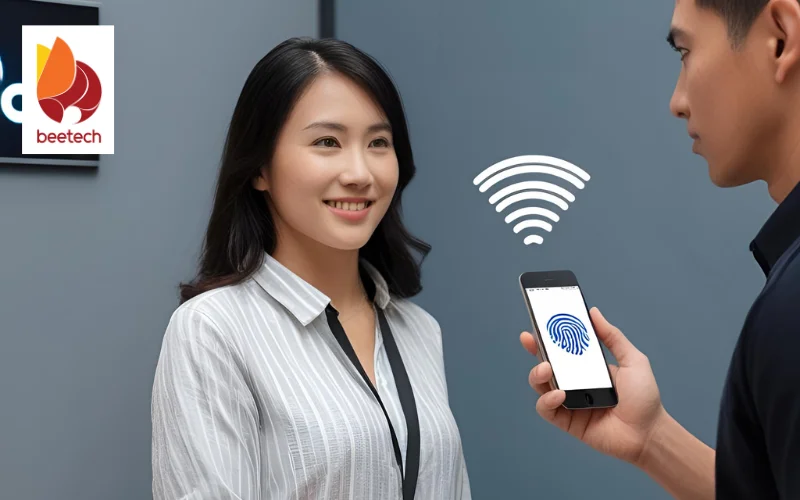
Digital payment systems are reaching a new IT solution with the integration of AI and biometrics. In 2025, cashless payments dominate retail, transportation, and public services. Consumers can pay using facial recognition, fingerprint scans, QR codes, NFC, and digital wallets.
AI enhances these systems by detecting fraud patterns, optimizing transaction speed, and enabling predictive analytics for merchants. Customers receive real-time spending insights, budget suggestions, and personalized offers through AI-enhanced financial apps.
Biometric payments are not only more secure but also faster and more convenient, particularly in busy environments like train stations, shopping malls, or airports. This frictionless experience is transforming how people shop, commute, and manage their finances.
Retailers are adopting smart point-of-sale systems that automatically apply discounts, suggest complementary products, and integrate with loyalty programs. Meanwhile, banks are leveraging AI for dynamic credit scoring and risk analysis, improving access to financial services.
>>> Read more: Develops digital converter software: Classify and special note
7. Blockchain: Transparency and Data Protection
Blockchain technology is reshaping the foundations of data security and transparency. With its decentralized, immutable ledger system, blockchain is now a critical component in sectors ranging from supply chains and finance to healthcare and education.
In supply chain management, blockchain ensures every step, from sourcing to delivery, is transparent and tamper-proof. This combats counterfeiting, improves traceability, and builds consumer trust.
Healthcare systems use blockchain to store and manage medical records securely, giving patients control over their data. Similarly, universities and credentialing organizations issue verifiable digital diplomas and certificates, eliminating the risk of fraud.
Government institutions and NGOs are leveraging blockchain for public records, voting systems, and aid distribution, ensuring integrity and reducing corruption. Its potential applications continue to expand as trust becomes a cornerstone of digital transformation.
Emerging decentralized identity (DID) solutions are also gaining traction, allowing individuals to prove identity across platforms without centralized databases—enhancing privacy and autonomy in the digital age.
8. Smart Education
Education is undergoing a renaissance through the integration of Artificial Intelligence and Extended Reality (XR). These technologies are enhancing teaching methods, curriculum design, and student engagement at all educational levels.
AI enables personalized learning pathways based on real-time performance data. It identifies learning gaps, suggests study materials, and adapts teaching strategies to suit individual needs. XR - encompassing Virtual Reality (VR) and Augmented Reality (AR) - immerses students in interactive environments where they can explore historical events, conduct scientific experiments, or dissect human anatomy.
This approach not only increases comprehension but also boosts retention. Remote learners benefit from virtual classrooms that mimic real-life interactions. Platforms like Microsoft Teams for Education, ClassIn, and Meta’s immersive learning tools are setting new standards for inclusive, engaging, and effective education.
Additionally, these education systems are automating administrative tasks - grading papers, scheduling classes, and generating student reports - allowing educators to focus more on mentorship and guidance.
9. Green Technology
Information technology is playing an increasingly vital role in environmental protection. From monitoring ecosystems to optimizing energy usage, this technology solution is driving sustainable solutions that combat climate change.
Smart sensors and AI-powered analytics are used to monitor pollution levels, detect deforestation, and manage water resources. In urban planning, digital twins simulate environmental impacts and support green infrastructure design.
Renewable energy systems like wind farms and solar grids use AI to forecast supply and demand, reducing waste and improving efficiency. Blockchain also contributes by tracking carbon emissions and ensuring regulatory compliance across supply chains.
Eco-conscious businesses and governments are adopting IT-driven sustainability frameworks to reduce their environmental footprint, promote circular economies, and meet global climate targets.
Green tech startups are also flourishing, offering solutions like carbon footprint tracking apps for consumers, AI-driven recycling sorters, and IoT systems for precision agriculture to minimize water and pesticide use.

10. 6G Networks
The arrival of 6G networks is poised to transform global connectivity, unlocking possibilities far beyond the reach of current technology. With speeds up to 100 times faster than 5G and ultra-low latency, 6G will power real-time applications that demand extreme precision and responsiveness.
From 16K video streaming and autonomous vehicles to remote surgeries and immersive AR/VR, 6G will enable seamless experiences across sectors. In industries like manufacturing, logistics, and smart cities, it will facilitate synchronized operations among robots, drones, and IoT systems, dramatically improving efficiency through near-instant data exchange.
Governments, research institutions, and technology leaders are investing heavily in 6G infrastructure, positioning it as the foundation of tomorrow’s digital economy. As deployment progresses, it is expected to give rise to groundbreaking applications that blur the line between physical and digital environments.
Crucially, 6G is being designed with AI at its core, allowing for self-optimizing networks that intelligently adapt to real-time traffic and user needs. This integration will elevate the speed, reliability, and scalability of digital services across every domain.
Conclusion
2025 marks an explosive era for IT solutions across all sectors, from everyday life to advanced industries. These innovations not only save time and improve efficiency but also elevate quality of life and reshape how humans interact with the digital world. Investing in these trends is essential for individuals and businesses to stay competitive in an ever-evolving tech landscape.
In the face of AI’s rapid advancement, BeetechSoft remains at the forefront, developing modern software tailored to market needs. Every product is customized to client-specific requirements, delivering optimal performance.
If you're looking for a reliable tech partner to support your digital transformation journey, contact BeetechSoft for expert consultation and the best-fit solution.