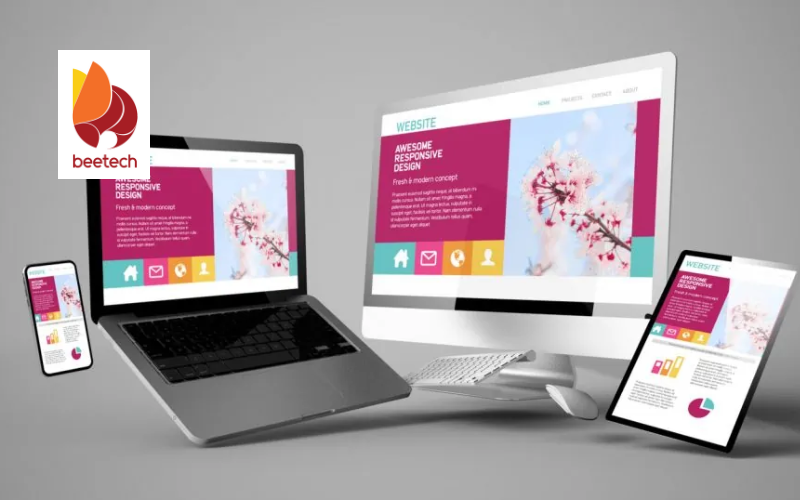
Web application development services thriving in the digital age
Web application development services are booming in the digital age, not merely as a passing trend but as a clear reflection of the comprehensive transformation in how people live, work, and connect. From small coffee shops to multinational corporations, the need to build dedicated web platforms to interact, serve, and add value for customers is stronger than ever. In the ever-expanding digital landscape, web applications serve as the "gateway" for organizations to enter the digital space in a proactive, professional, and effective way.

1. Why are web application development services thriving?
Web application development services have become a crucial part of the digital age, thriving in areas such as e-commerce, online education, and digital banking. The following practical factors explain why this service is growing rapidly:
1.1. Increased demand for online services
One of the main reasons web application development has become so popular is the strong growth in the demand for online services. According to reports from Google and Statista, the global number of internet users surpassed 5 billion in 2023, and this trend continues to rise.
E-commerce is dominating the retail market. Platforms like Shopee, Tiki, and Lazada are increasingly attracting a large number of online shoppers. Consumers not only shop but also seek healthcare services, financial services, and transportation through web applications.
Online education is growing rapidly. Platforms like Coursera, Khan Academy, and EdX have completely transformed how millions of people learn. Developing web applications helps provide a flexible and efficient learning space for users.
Digital banking is also booming. Banking apps like Vietcombank, Techcombank, and MB Bank offer completely web-based services, enabling users to carry out transactions anytime, anywhere without visiting a branch.
1.2. Convenience and flexibility
Web applications offer convenience and flexibility that make them highly popular. This is one of the main reasons for the growing adoption of this service.
No complex installation required: Web applications run directly in the browser, saving users time and effort as they don’t need to download or install any software. For example, when using services like Google Drive, users don’t need to install software; they simply access it via the browser to work with documents.
Accessible on any device: Web applications work across various platforms and devices, from desktops and laptops to mobile phones. This allows users to access and use the service anytime, anywhere. This is especially important in today’s flexible and mobile work environment.
1.3. Cost-effectiveness
Web application development costs are generally lower compared to traditional software applications, and this is a key factor making the service more attractive to businesses, especially startups and small-to-medium enterprises.
Lower development and maintenance costs: Developing a web application requires fewer resources than developing mobile apps. Companies can build a single web application that works across all devices, reducing costs and development time compared to having to develop apps for each operating system like iOS or Android.
Easier updates and maintenance: Updates and bug fixes can be applied directly on the server without users needing to download updates to their devices. This helps save maintenance costs and ensures users always have access to the latest version without any hassle.

2. Benefits of investing in web application development
By understanding these key benefits, businesses can see how investing in web application development can drive growth, improve efficiency, and enhance customer satisfaction in the digital age.
2.1. Increased customer reach
One of the most significant benefits of investing in web application development is the ability to vastly expand customer reach. Unlike traditional stores that are limited by geographic location, a web application can serve users anywhere as long as they have internet access.
For example, global e-commerce platforms like Amazon and Alibaba can reach millions of customers from around the world, helping small businesses break through geographical barriers and increase sales opportunities.
2.2. Optimizing business performance
Web application development not only helps businesses connect with customers but also optimizes internal processes. Sales management systems, Customer Relationship Management (CRM), and Enterprise Resource Planning (ERP) systems can all be effectively implemented on web platforms, offering significant benefits. By synchronizing data and workflows, web applications help businesses save time and reduce operational costs, minimizing errors and enabling more accurate decision-making.
For instance, platforms like Shopify have helped thousands of small businesses optimize sales processes and inventory management through a simple web application.
2.3. Improving user experience
Finally, web application development provides a great benefit in enhancing user experience. A user-friendly, easy-to-navigate, and fast interface is key to retaining users. Customers are more likely to enjoy interacting with, searching for information, and completing transactions on an online platform.
Modern web applications like Facebook and Google have proven that optimizing user experience can make a huge difference in building loyalty and increasing conversion rates. A smooth, easy-to-use web application not only satisfies customers but encourages them to return again.

>>>Read more: Important considerations in custom software development for the logistics industry
3. Popular types of web application development services today
As information technology becomes central to nearly every business activity, web application development is no longer a luxury it’s a necessity across industries. Below are the most in-demand and widely adopted types of web application development services today:
3.1. E-commerce website development
This is one of the most common needs for individuals and businesses aiming to expand their online presence. Instead of relying solely on e-commerce platforms, many opt to invest in a professional website to gain full control over product displays, shopping carts, payments, and inventory management. A well-developed e-commerce web app with optimized UX/UI, secure payment gateways, and strong SEO can significantly boost conversion rates and enhance customer retention.
3.2. Enterprise management applications (CRM/ERP)
CRM (customer relationship management) and ERP (enterprise resource planning) systems are the backbone of internal digital transformation. Developing web-based versions of these platforms allows businesses to access and manage data from anywhere, using just a browser. For example, a logistics company can track shipments, drivers, and warehouse stock in real-time entirely through a web application.
3.3. E-learning platforms
Online education has surged, especially post-pandemic, and the trend continues to grow. From language centers to formal schools, the demand for web application development in e-learning is booming. These platforms typically offer video lectures, quizzes, discussion forums, and automated grading systems. Their flexibility and ability to deliver personalized learning experiences make e-learning a cornerstone of modern education.
3.4. Web apps for logistics and delivery services
The logistics sector requires precision and real-time updates. Custom-built web apps for transportation businesses can integrate GPS tracking, order management, delivery scheduling, and automated notifications. Logistics is one of the industries driving digital transformation through targeted web application development that matches its unique operational needs.
3.5. Online booking systems and information portals
From private clinics and spas to public service centers, online booking systems help reduce front-desk workload, optimize scheduling, and improve customer experience. Modern portals often include chatbots, automated confirmations via email/SMS, and calendar synchronization (e.g., with Google Calendar). These web applications are increasingly common across both private and public sectors.

4. Choosing a reliable web application development partner
Choosing a trusted partner for web application development is a critical factor in ensuring the success of any digital transformation initiative. In reality, many projects fail not because of weak ideas, but due to inexperienced vendors, unclear processes, or a poor understanding of business requirements.
That’s why many businesses today are turning to experienced and process-oriented companies like BeetechSoft a firm that has successfully delivered hundreds of web application development projects across sectors such as e-commerce, enterprise management, education, logistics, and public services.
BeetechSoft provides more than just technical execution. They work alongside clients from the initial ideation phase through to business analysis, UI/UX design, system development, and post-launch support. With a team of seasoned software engineers and expertise in modern technologies such as ReactJS, NodeJS, Python, Microservices, and DevOps, BeetechSoft ensures timely delivery, high performance, and long-term scalability.
What sets BeetechSoft apart is their transparent and well-defined working process, which gives clients full visibility into project timelines and budget control a significant advantage, particularly for SMEs seeking cost-effective yet high-quality digital solutions.
In short, if you’re looking for a reliable partner in web application development one that offers strategic insight and solid execution BeetechSoft is a trusted choice to accompany your business on its digital journey.

5. Conclusion
In the digital age, web application development is not just a trend but a foundation that helps businesses adapt, optimize operations, and expand their market. From small shops to large enterprises, implementing web platforms has proven effective in enhancing customer experience, reducing costs, and increasing competitiveness. Investing in web application development is a strategic move to thrive in the digital era.